
Independent guidance · Comparison guides
Chrysotile vs Amosite vs Crocidolite
The three fibres used commercially in UK construction — white, brown and blue — compared on morphology, hazard, use and regulation.
Key takeaways
- PLM analysis under MDHS 77 identifies the fibre type — always ask for it on the certificate
- Cement products → typically chrysotile — non-licensed removal
- AIB → typically amosite ± chrysotile — licensed removal
- Sprayed coating in a pre-1970 building → treat as crocidolite ± amosite — licensed removal
- Textured coating (Artex) in a pre-1985 home → typically chrysotile — non-licensed removal
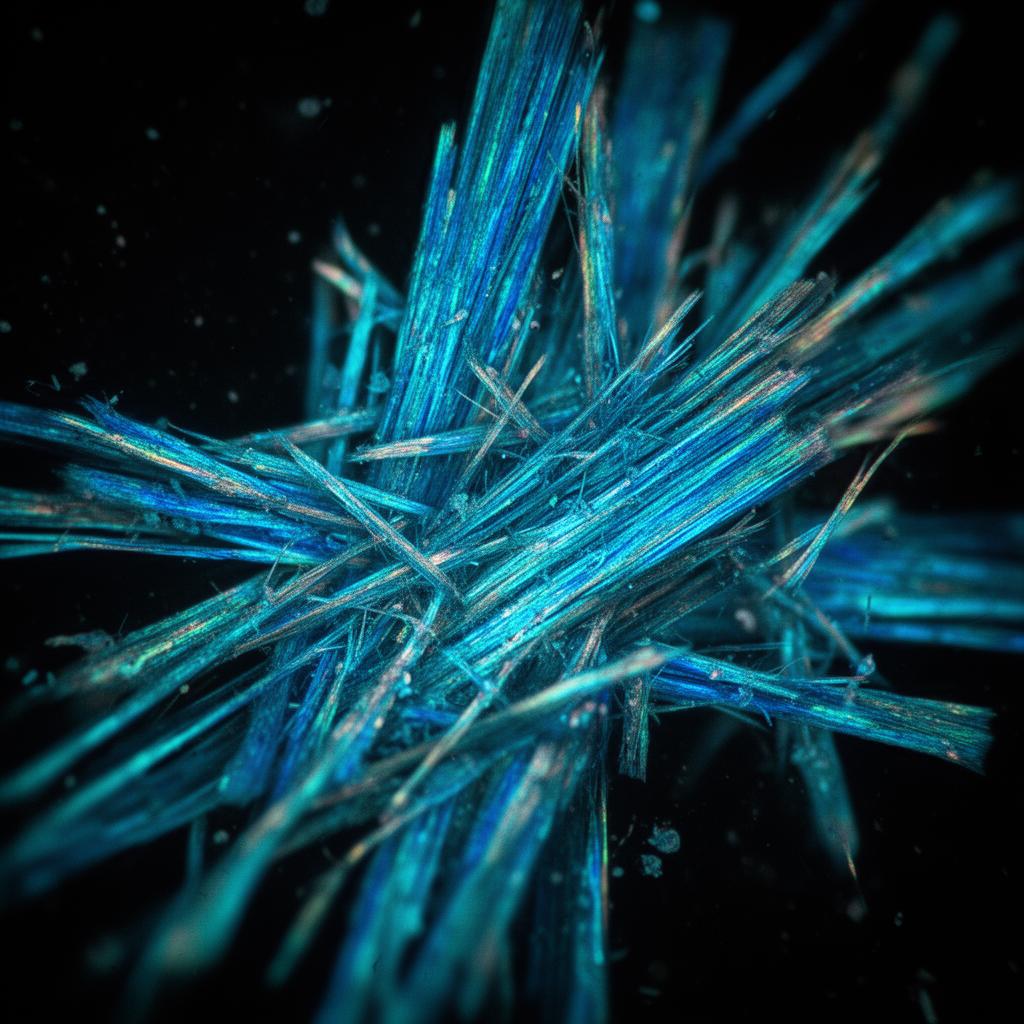
The colour names — white, brown, blue — refer to the raw fibre and not the finished product. All three are Group 1 human carcinogens and all three are treated identically under CAR 2012. This guide compares them for identification, hazard and regulatory position.
Interactive decision tree
Answer 2–3 questions to get a specific survey recommendation.
Question 1
What are you trying to establish?
Head-to-head comparison
The table below sets out the three fibres against the criteria surveyors and analysts actually use.
| Criterion | Chrysotile (white) | Amosite (brown) | Crocidolite (blue) |
|---|---|---|---|
| Mineral group | Serpentine | Amphibole | Amphibole |
| Fibre shape | Curly, flexible | Straight, needle-like | Straight, fine, needle-like |
| UK share of historical use | ~90% | ~5% | ~3–5% |
| Peak UK use | 1930s–1999 | 1945–1980 | 1930s–1970 |
| Ban in UK | November 1999 | 1985 | 1970 |
| Common materials | Cement, textured coatings, floor tiles, gaskets | AIB, high-fibre insulation boards | Sprayed coatings, lagging (some) |
| Biological persistence | Cleared faster from the lung | Highly persistent | Highly persistent |
| Mesothelioma potency (relative) | Lowest of the three | High | Highest |
| Regulatory status | CAR 2012 — Group 1 carcinogen | CAR 2012 — Group 1 carcinogen | CAR 2012 — Group 1 carcinogen |
What this means
The three fibres differ in hazard potency, but the law does not — all are Group 1 carcinogens under CAR 2012 and treated identically for management, removal and waste.
Chrysotile (white) — pros and cons of encountering it
The overwhelmingly commonest UK fibre — behind almost every cement product, most textured coatings, most floor tiles and most gaskets.
Practical position
- Usually bonded into non-friable matrices (cement, tile, gasket) — low fibre release when intact
- Cleared faster from the lung than amphiboles
- Most common ACM, so removal contractors have long UK track records
- Often non-licensed removal — proportionate cost profile
Risk profile
- Still a Group 1 carcinogen — 'white asbestos safety' claims are not credible
- Weathering, sanding, cutting or DIY release fibres readily
- Presence in textured coatings often surprises homeowners doing kitchen refits
- Trace results in modern coatings still trigger CAR 2012 duties
Amosite (brown) — pros and cons of encountering it
The second commonest UK fibre — dominant in AIB and high-density insulation boards. Amphibole morphology means high biological persistence.
Practical position
- Distinctive high-fibre-content boards easier to identify visually
- Well-defined licensed removal regime — no ambiguity
- Encapsulation is a well-tested management response for stable AIB
Risk profile
- Highly friable — releases fibres readily under damage
- Always licensed removal — highest cost bracket
- Persistent in the lung — no clearance mechanism
- AIB is the single commonest cause of UK trades-exposure incidents
Crocidolite (blue) — pros and cons of encountering it
The rarest and most potent fibre. Historic use in sprayed coatings and some lagging. Banned in the UK in 1970 but still present in older buildings.
Practical position
- Rare in UK stock built after 1970
- Distinctive fine blue fibres often visible under PLM
- Licensed regime and stringent enclosure standards well established
Risk profile
- Highest mesothelioma potency of the three fibres
- Highly persistent — biological clearance is negligible
- Often found with amosite and chrysotile in the same material
- Any suspected sprayed coating in a pre-1970 building must be treated as crocidolite until proven otherwise
Found this guide useful?
Need chrysotile vs amosite vs crocidolite surveyed or removed?
Fixed-price written quotes from qualified asbestos consultants across London, Essex, Kent and the surrounding South East — no obligation.
Recommended scenarios
For dutyholders, the fibre type rarely changes the immediate action — CAR 2012 treats all three identically. It does matter for surveyors, analysts and epidemiological context.
- •PLM analysis under MDHS 77 identifies the fibre type — always ask for it on the certificate
- •Cement products → typically chrysotile — non-licensed removal
- •AIB → typically amosite ± chrysotile — licensed removal
- •Sprayed coating in a pre-1970 building → treat as crocidolite ± amosite — licensed removal
- •Textured coating (Artex) in a pre-1985 home → typically chrysotile — non-licensed removal
- •Historic pipe lagging → typically amosite/crocidolite mix — licensed removal
What this means
The fibre name goes on the register entry and drives the epidemiological interpretation — the CAR 2012 duty is the same regardless.
Recommended next step
In practice, the choice above turns on the facts of your building and the works. If you'd rather have an independent consultant confirm the recommendation in writing, request a fixed-price bulk sample or survey quote. Fibre type is confirmed by PLM under MDHS 77 in a UKAS 17025 laboratory — request a fixed-price sample analysis or full survey quote. Elements Surveying Group is an independent consultancy that does not own a removal arm and does not take referral fees — the recommendation is evidence-led, not commercial.
- •Request a fixed-price bulk sample or survey quote — one working day turnaround
- •Speak to a qualified consultant on 0208 036 1099 (Mon–Fri, 8am–6pm)
- •Independent, conflict-free — no removal arm, no referral fees
What this means
If the comparison still leaves doubt, request a quote — the enquiry costs nothing and puts the decision in writing from an independent asbestos consultancy.
Frequently asked questions
Is white asbestos safer than blue?
It is less potent per fibre for mesothelioma, but it is still a Group 1 carcinogen. UK law makes no distinction.
Can I tell fibre type visually?
No — colour names refer to raw fibre. Finished products of all three types look similar. PLM analysis is required.
Does the fibre type change removal cost?
Indirectly — amosite in AIB is always licensed, chrysotile in cement is usually non-licensed. The material dictates the cost more than the fibre name.
What lab method identifies the fibre?
PLM under MDHS 77 in a UKAS 17025 accredited laboratory. The certificate will state the fibre type(s) detected.
Speak to an independent qualified consultant about your project
Independent asbestos surveying specialists. Evidence-based recommendations, P402-qualified surveyors, coverage across the South East and East of England. Every enquiry is reviewed by a qualified consultant — consultancy before sales, no obligation.
Read next