Overview
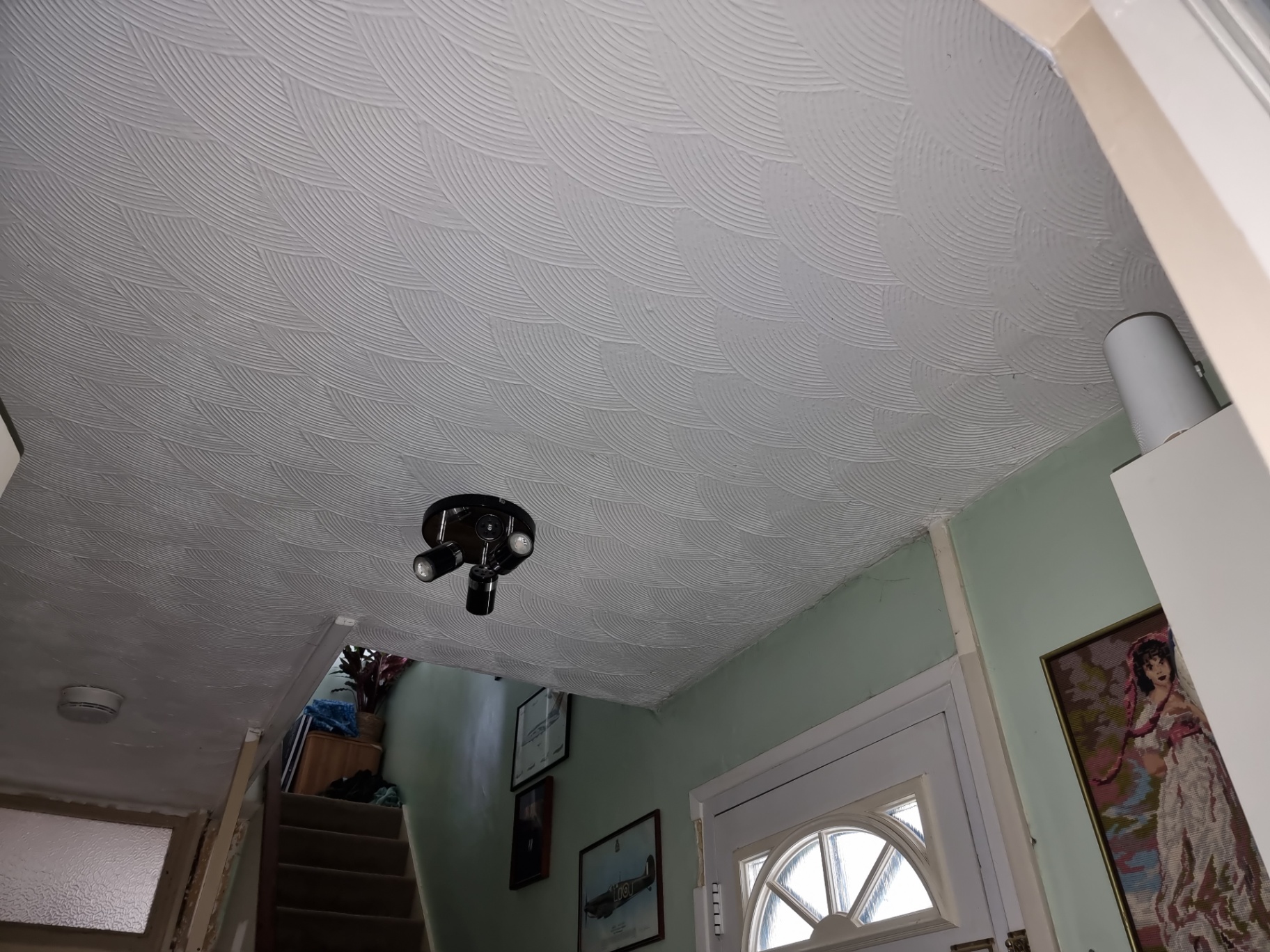
Textured coatings such as Artex, Wondertex and Suretex were used extensively on UK ceilings and walls from the 1960s until 1999. They typically contain 1–5% chrysotile as a workability additive. The asbestos is bound within a hard set coating, so risk in undisturbed condition is low — but sanding, scraping or steam-stripping can release fibres.
Typical uses
- •Ceiling decoration
- •Wall coverings
- •Cover for skim coats
- •1970s–80s domestic finishes
Typical fibre type
Chrysotile is the most commonly identified fibre in this material.
Visual inspection alone cannot confirm the presence or type of asbestos. Laboratory analysis is required.
🟢 Low Risk
Low fibre content and a hard bound matrix mean intact coatings present low risk. Risk increases significantly during removal — never dry-sand or power-tool textured coatings.
Typical locations
Survey recommendation
Sampling
A small bulk sample by a qualified surveyor confirms or rules out asbestos before any redecoration that involves removal or sanding.
See our survey servicesManagement advice
- Overboarding with plasterboard is the safest treatment for intact coatings
- Never sand, scrape dry or use power tools on textured coatings
- Removal is non-licensed but Notifiable Non-Licensed Work (NNLW) — competent contractor required
- Steam stripping by trained operatives is the usual removal method