Overview
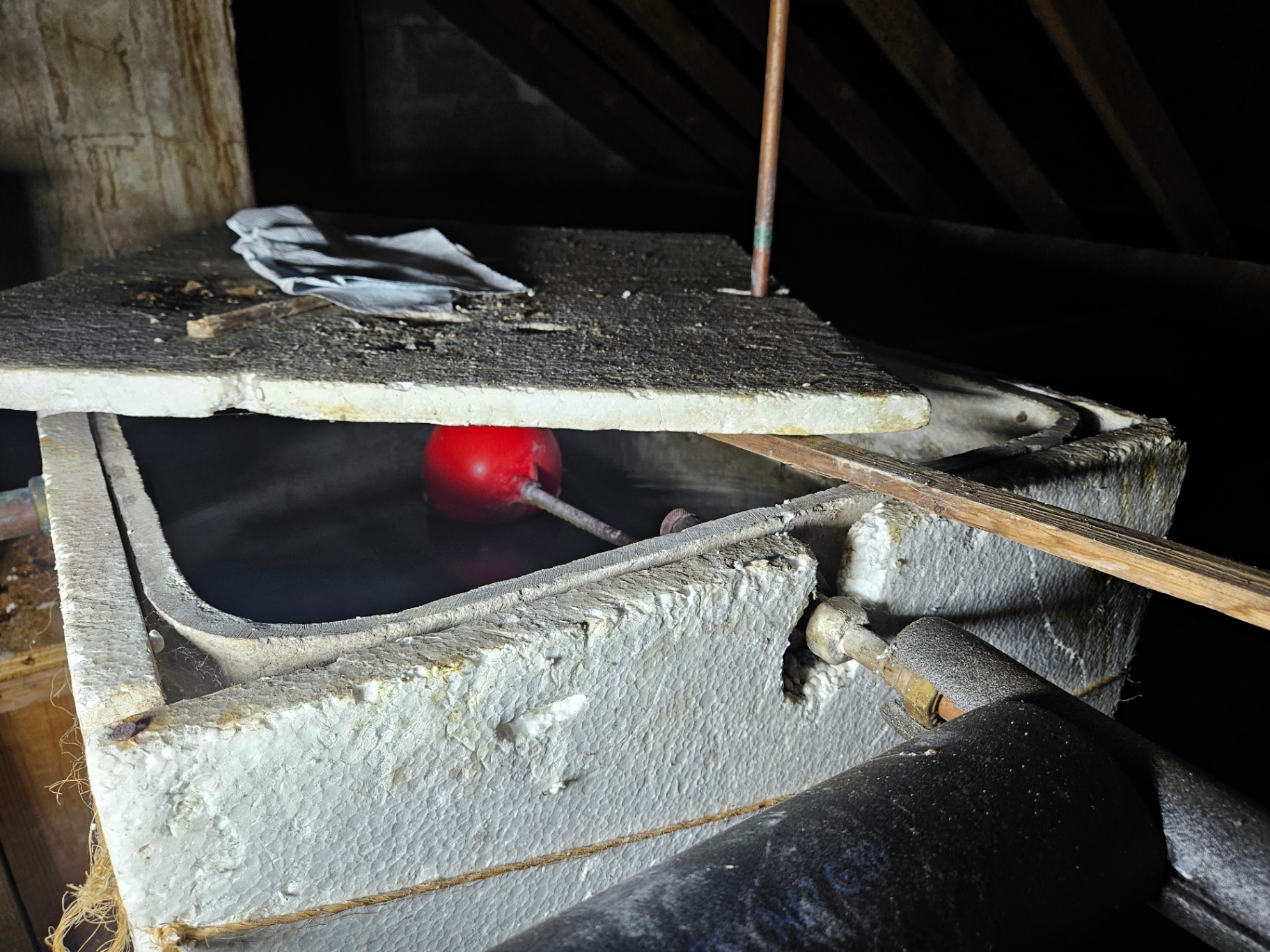
Asbestos cement cold water tanks were a standard fitting in UK lofts from the 1950s to the late 1970s. They typically contain around 10–15% chrysotile. Cement tanks are low risk if intact, but are easily cracked during plumbing work or insulation upgrades.
Typical uses
- •Cold water storage
- •Header tanks
- •Industrial process tanks
Typical fibre type
Chrysotile is the most commonly identified fibre in this material.
Visual inspection alone cannot confirm the presence or type of asbestos. Laboratory analysis is required.
🟢 Low Risk
Bonded cement — low risk if intact. Cracks, broken corners or damaged lids during loft work increase risk and warrant replacement.
Typical locations
Lofts Plant rooms Roof spaces
Survey recommendation
Sampling
Where a tank is suspected, sampling or visual ID by a competent surveyor confirms the material before replacement.
See our survey servicesManagement advice
- Replace cracked or damaged tanks promptly
- Do not drill, cut or break the tank in situ
- Drain, lift whole and double-bag for disposal
- Non-licensed removal under HSG210