Overview
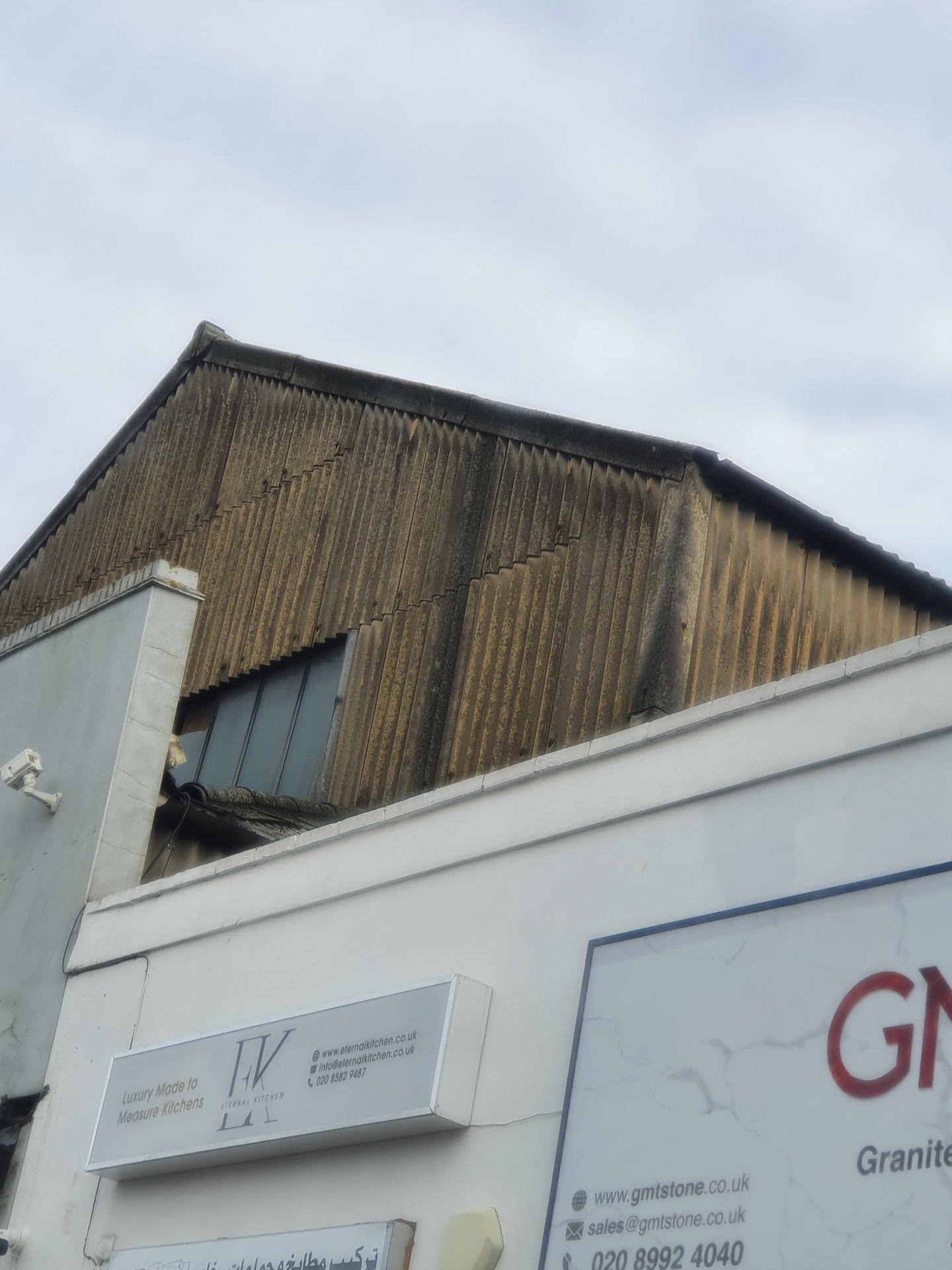
Asbestos cement (AC) is a composite of Portland cement bound with chrysotile fibres, typically 10–15% by weight. Corrugated AC sheets were used extensively for low-cost roofing across the South East and East of England between the 1950s and 1999, when all asbestos was banned. Sheets weather over time and the surface cement matrix erodes, releasing fibres when broken, drilled or pressure-washed.
Typical uses
- •Garage roofs
- •Shed and outbuilding roofs
- •Agricultural buildings
- •Industrial units
- •Carport canopies
Typical fibre type
Chrysotile is the most commonly identified fibre in this material.
Visual inspection alone cannot confirm the presence or type of asbestos. Laboratory analysis is required.
🟢 Low Risk
Bonded cement products are classified as lower risk because fibres are held in a hard matrix. Risk rises sharply if sheets are broken, cut or weathered to friable lichen-covered surfaces.
Typical locations
Survey recommendation
Management Survey
For an intact roof, a Management Survey records condition and risk. A Refurbishment or Demolition Survey is required before removal or any disturbance.
See our survey servicesManagement advice
- Leave intact roofs undisturbed and inspect annually
- Never pressure wash, drill, cut or sand the sheets
- Do not walk on the roof — sheets are brittle and fall-through is a serious risk
- Engage a licensed contractor for removal; AC removal is non-licensed but must follow HSG210